Product Overview
Color pavement sealcoat is a water-based PMP micro-asphalt system for upgrading existing asphalt pavement with a colored, anti-skid, wear-resistant surface. It is suitable for pavement renewal projects that need clear visual guidance, stronger surface protection, and a cleaner construction process than hot colored asphalt overlays.
The system is often used as a lightweight pavement color renewal method on existing black asphalt. It improves appearance, friction, water resistance, and surface durability without removing and repaving the original pavement.
Two-Component Micro-Asphalt System
The material is prepared from two components:
- Component A: water-based micro-asphalt emulsion.
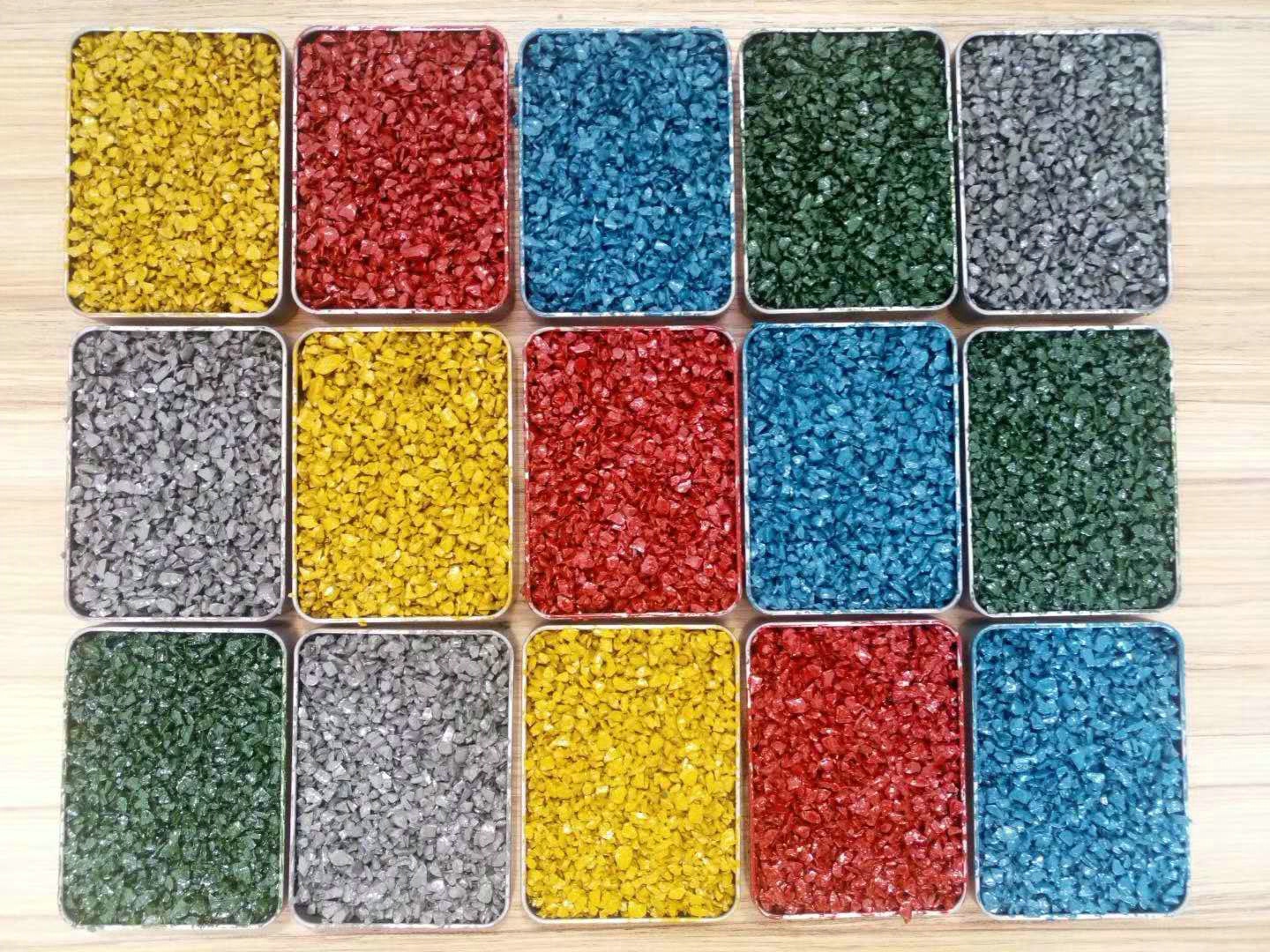
- Component B: polymer micro-asphalt aggregate.
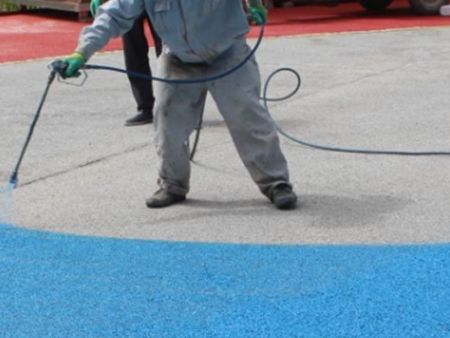
The standard mixing ratio is A:B = 1:3. The two components are blended with a hand mixer or mechanical mixer for approximately 1 minute until the mixture is uniform, with no visible settlement and no coarse particle feel. After mixing, the material is applied with dedicated micro-asphalt spray equipment.
Layered Spray Structure
The pavement system uses a layered build-up rather than a single paint film:
- Base bonding layer: promotes compatibility and adhesion to the existing asphalt surface.
- Wear-resistant middle layer: provides body, flexibility, skid resistance, and abrasion resistance.
- Protective surface layer: improves color retention, water resistance, and surface sealing.
For projects that require a thicker structure, the color system can be paired with a thin asphalt wearing course, such as a “2 cm thin asphalt layer + color micro-asphalt coating” solution.
Color-Separated Construction Process
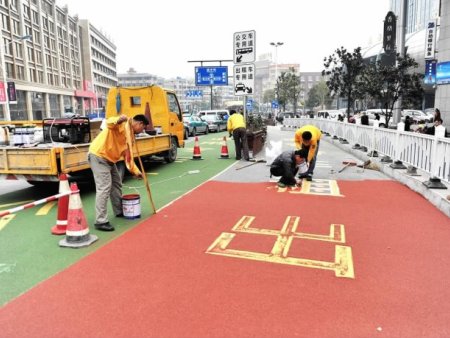
A typical two-color roadway process can divide a 7 m wide road into two 3.5 m lanes, then add a 10 cm center marking after both colors are complete. The same method can be adapted to bike lanes, bus lanes, pedestrian zones, parking areas, and scenic roads.
- Surface cleaning: remove dust, soil, loose particles, oil contamination, and standing water. Heavily contaminated areas should be wire-brushed or pressure-washed. Apply an interface primer where needed.
- Masking and protection: protect curbs, drainage structures, road edges, and the center color boundary with tape and masking paper. Use side shields during spray work to prevent overspray.
- First color spray: spray the first color area after masking.
- Second color spray: after the first color dries, mask and spray the second color area using the same method.
- Surface coat: after the first full pass dries and the reaction completes, spray the second surface layer by color section.
- Marking: after the surface layer dries and reacts, apply the center line or other road markings.
- Opening: release the section after the coating is fully dry and the surface is stable.
Technical Properties
- Adhesion: compatible with asphalt substrates and suitable for application soon after black asphalt pavement is completed.
- Flexibility: the material system balances strength and flexibility to reduce peeling risk.
- Skid resistance: textured micro-asphalt aggregate provides wet-condition friction; skid resistance target is not less than 0.50.
- Wear resistance: designed for slow-traffic systems and decorative pavement zones subject to foot, bicycle, and light vehicle traffic.
- Water-based environmental profile: low odor, water-based chemistry, and VOC reference limit not higher than 120 g/L.
- Chemical resistance: reference requirements include no blistering or peeling after water, oil, alkali, and acid exposure, with slight color change allowed.
- Film appearance: after drying, color and aggregate distribution should be uniform, with no cracking or aggregate shedding.
Where to Use
- Urban greenways, bike lanes, pedestrian paths, and slow-traffic corridors
- Parks, scenic roads, waterfront paths, and landscape pavement
- Campuses, playgrounds, plazas, and community activity areas
- Parking lots, sports-court access roads, and pavement nodes
- Color restoration and functional upgrade of existing black asphalt pavement
Advantages
- Faster and lighter than removing and replacing colored asphalt pavement
- Stronger surface build and better durability than simple decorative paint
- Water-based, low-odor application for public-space work
- Separate-color spraying enables clean lane boundaries and custom visual layouts
- Anti-skid and decorative functions in one pavement renewal system