Product Overview
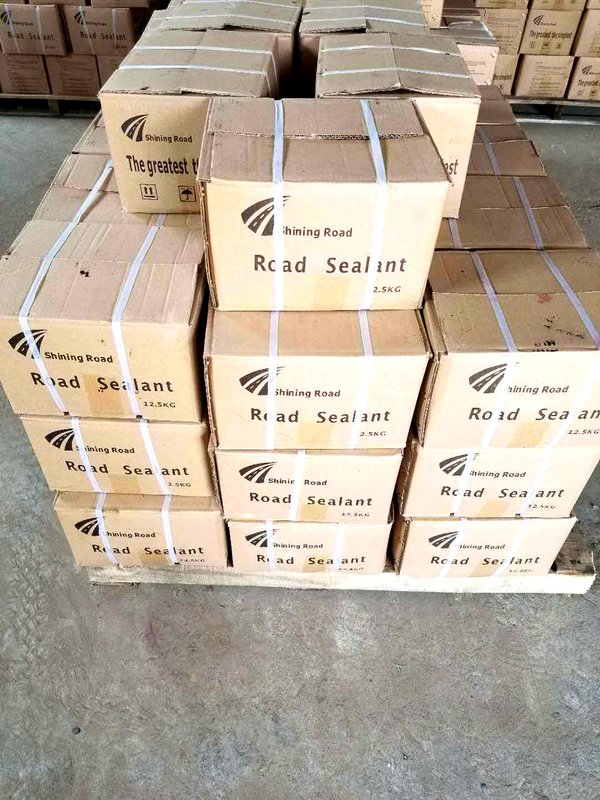
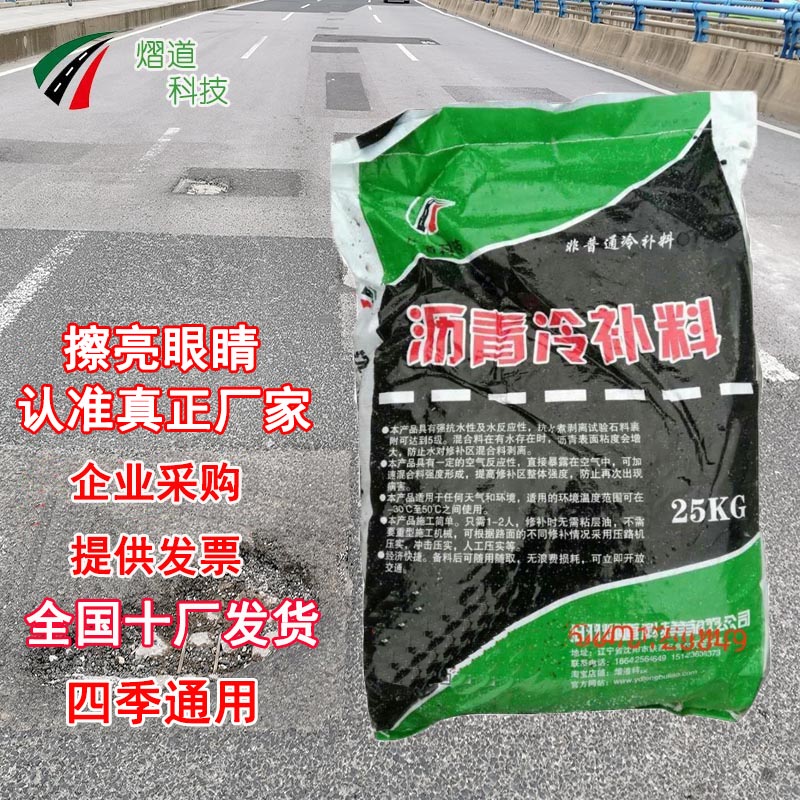
YD-03 is an instant-compaction, high-strength asphalt cold patch for fast pavement repair. It is engineered to solve common cold patch problems: weak early strength, weather-sensitive curing, long traffic closure, poor adhesion, and short repair life. The material remains loose and workable in the bag, then forms a high-strength bonding network as soon as it is compacted.
One placement can address multiple pavement defects, including potholes, raveling, aggregate loss, mesh cracking, alligator cracking, open cracks, and localized surface failure. After compaction, traffic can be released immediately, and continued vehicle loading helps densify the repair.
Capsule Asphalt Technology
Conventional cold patch normally relies on solvent evaporation or emulsion breaking to form strength. YD-03 combines modified asphalt with capsule asphalt technology and a water-curing reaction system:
- Capsule asphalt storage stability: modified asphalt is sealed inside microscopic capsule structures, so the packaged material stays loose, clean, and non-caking during transport and storage.
- Pressure activation: spreading, tamping, plate compaction, roller compaction, or vehicle loading ruptures the capsules at aggregate contact points.
- Water-curing reaction: the released active components react rapidly with environmental moisture instead of waiting for solvent evaporation or complete drying.
- Instant bonding network: compaction immediately creates a high-strength asphalt bonding network that ties the repair material to the existing pavement interface.
Field Performance
- All-weather placement: usable from -30°C to 80°C and in damp or rainy conditions.
- No heating: ready to place at ambient temperature, reducing fuel use and equipment demand.
- Immediate load capacity: compacted repairs can carry traffic without a curing wait.
- Progressive densification: normal traffic keeps pressing the material tighter, improving aggregate interlock and surface stability.
- Water sealing: the dense cured structure blocks water infiltration and protects the base layer.
- Hot-mix-like finish: repairs can achieve a smooth transition to the surrounding pavement when properly leveled and compacted.
Comparison With Common Cold Patch Systems
| Attribute | Pressure-Sensitive Capsule Patch | Water-Activated Cold Patch | Ordinary Solvent Cold Patch |
|---|---|---|---|
| Strength formation | Vehicle or mechanical pressure | Reaction after water activation | Solvent evaporation |
| Traffic opening | Immediate | Requires curing | Requires curing |
| Crew size reference | 1–2 workers | 5–6 workers | 5–6 workers |
| Storage reference | 5+ years for pressure-sensitive systems | Less than 3 months | About 6 months |
| Rainy-condition use | Suitable | Limited | Limited |
| Durability reference | 5+ years when correctly installed | Less than 1 year | About 6 months |
Economic Reference
Pressure-sensitive repair material has a higher initial unit cost but is designed to reduce repeat maintenance. A reference comparison for 100 m² over 5 years shows:
| Material Type | Unit Cost Reference | Maintenance Frequency | 5-Year Total Reference |
|---|---|---|---|
| Pressure-sensitive repair material | 350 RMB/m² | 0 times/year | 35,000 RMB |
| Water-activated cold patch | 190 RMB/m² | 1 time/year | 95,000 RMB |
| Quick-setting cold patch | 150 RMB/m² | 1 time/year | 75,000 RMB |
| Ordinary cold patch | 120 RMB/m² | 3 times/year | 180,000 RMB |
The reference model indicates that a long-life pressure-sensitive repair can reduce 5-year total spend to about 19% of ordinary cold patch maintenance cost when repeat repairs are included.
Applications
- Municipal roads: fast pothole, raveling, crack, and surface-defect repair on arterials, secondary roads, and local streets.
- Highways: emergency repair on traffic lanes, passing lanes, ramps, and shoulders.
- Airports and ports: high-load repair around aprons, runways, bridge expansion joints, and port roads.
- Special environments: winter work, rainy-season maintenance, wet potholes, and locations where traffic closure must be minimized.
Application Method
- Clean: remove loose material, mud, and debris. The repair face should be hard and clean; complete drying is not required.
- Fill: place YD-03 directly into the defect and leave the surface 1–2 mm above the surrounding pavement.
- Compact: use a foot tamper, hand tamper, plate compactor, roller, or passing vehicle load until the surface is flat and dense.
- Open: release traffic immediately after compaction.